

Glass Art
Micromosaics
Tiny tesserae. Infinite detail.
Janice's Micromosaic Journey
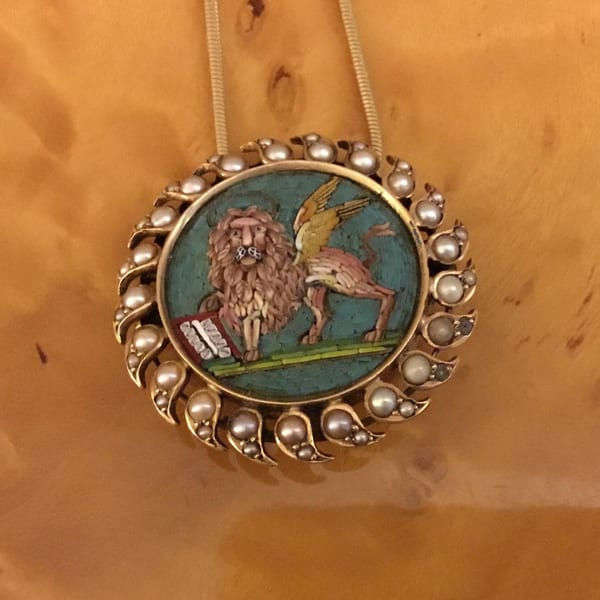
Janice's love of micromosaic glass jewelry started in 2017. At the time, she was considering going to the Glass Art Society conference in Murano, Italy, in the spring of 2018. She went back and forth many times about whether to go. But everything changed the day she walked into a small gallery in Berkeley, California, a few miles from where she lives. She was browsing the shop when she noticed a small medallion of a winged lion and asked the clerk to take it out of the case so she could look at it. Janice was astounded to discover it was a mosaic pendant the size of a quarter, made of hundreds of slivers of glass. It depicted the Lion of Venice, which sits high atop a granite column in Piazza San Marco—a bronze sculpture of a winged lion she'd seen many times on her trips to Venice. She bought the pendant without a second thought, which is unusual for her since she's the type of shopper who hems and haws, leaves, returns, hopes the piece is still there, and then finally buys whatever she's been considering. She brought her new treasure home and was certain of two things: She needed to go to the Glass Art Society conference (her tiny winged lion told her so), and that she needed to learn more about micromosaics.
A Little Micromosaic History
Micromosaics have been created in Italy since the mid-1600s. They were popular in the mid-1800s during the Grand Tour era. During that time, wealthy families would send their children as they attained adulthood in their twenties, often with chaperones, to travel around Europe and steep themselves in culture and fine art. In Italy, they purchased micromosaics in jewelry, snuff boxes, and other small items, which they brought home as souvenirs of their travels. Often the scenes in these tiny mosaics were images of archeological ruins or landscapes. Italian glass artists turned to making micromosaics to fill these wealthy tourists’ requests who would, at times, commission custom pieces. Creating and collecting micromosaics continued in Italy until the end of the Victorian era, in the early 1900s. During this time, micromosaic styles changed. They transformed from images of ancient historic sites into popular floral motifs, which were purchased by tourists who, with the advent of modern transportation, came to Italy in great numbers.
Creating Micromosaics
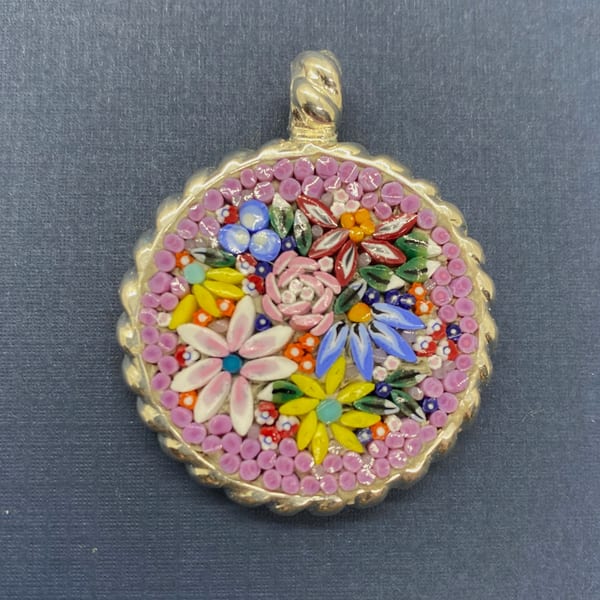
Micromosaics are made from tiny tiles called tesserae; in their most classic form, they are slender rectangles, though they can be almost any shape to fill gaps between tiles. The tesserae are tiny, but their size can vary. Smaller tesserae typically indicate a higher-quality item, and usually an older one as well. My winged lion pendant’s pieces are all as thick as a thread and about 2 millimeters long. Micromosaics are made using what are called filati, the Italian word for string. Coincidentally, most English-speaking glass artists call them stringers—pretty interesting, I think. To create the micromosaic, you start by nipping up the filati into small pieces called tesserae. The tesserae are laid into a bed of adhesive in birthday candle style—that is, they sit upright with the cut end showing. Thus, the diameter of the stringer (filati) dictates the size of the tesserae. Traditional Italian adhesive is a paste made from a secret recipe, closely guarded by the Italians. It contains marble powder, lime, and linseed oil, plus who knows what else? The Italians aren’t telling. Typically, the tesserae are set in some type of bezel to keep them in place. The most traditional settings are filigreed. As a micromosaic artist adds the tesserae to the bezel, they create a design of their choice. After the design is complete, the piece needs to rest while the paste dries, and then this wearable mosaic is ready to be worn. There are ways in which micromosaics can be ground and polished, but there is no need to. The shiny cut ends of the tesserae sparkle perfectly with no additional work needed.
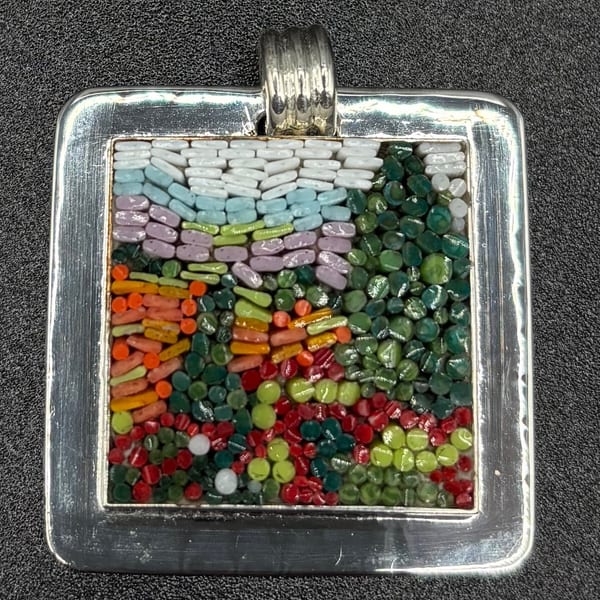
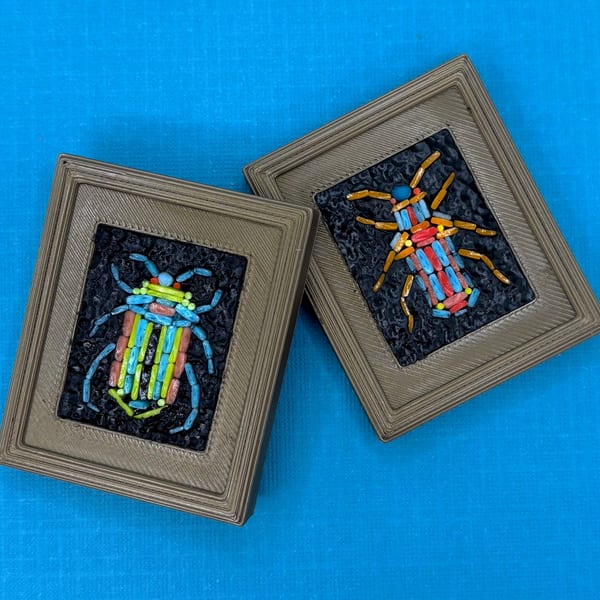
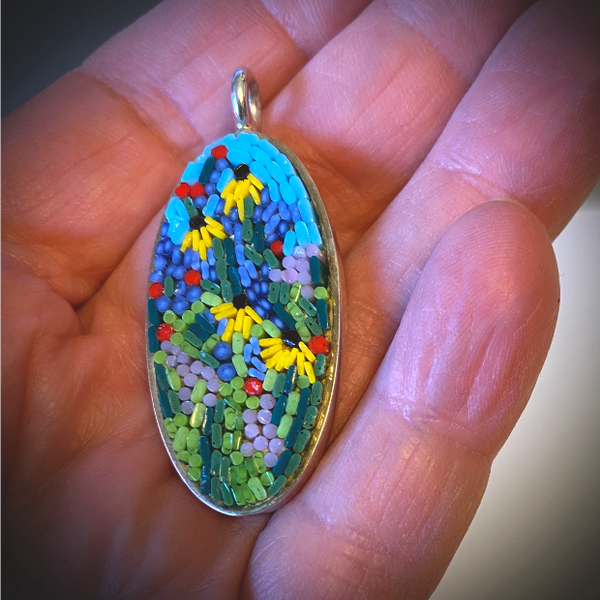
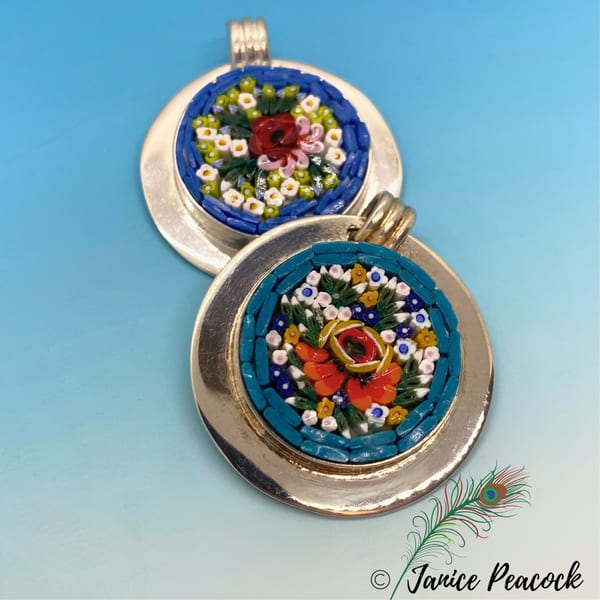
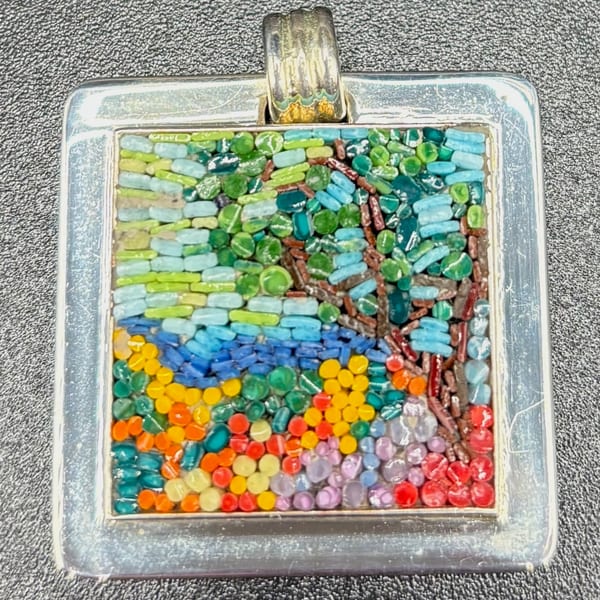
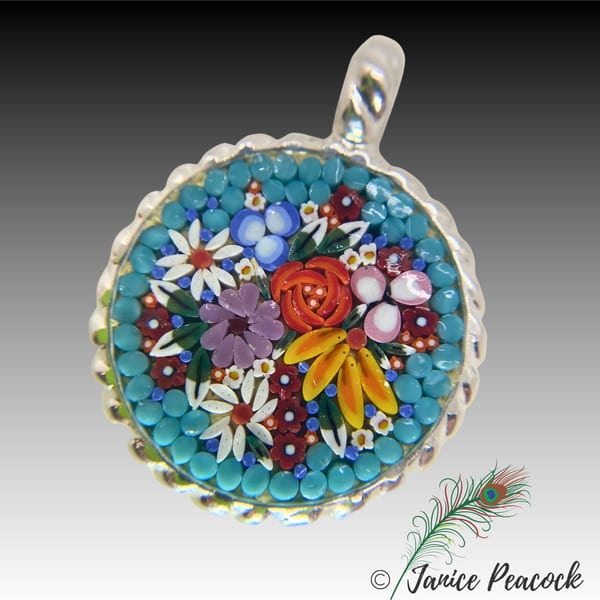
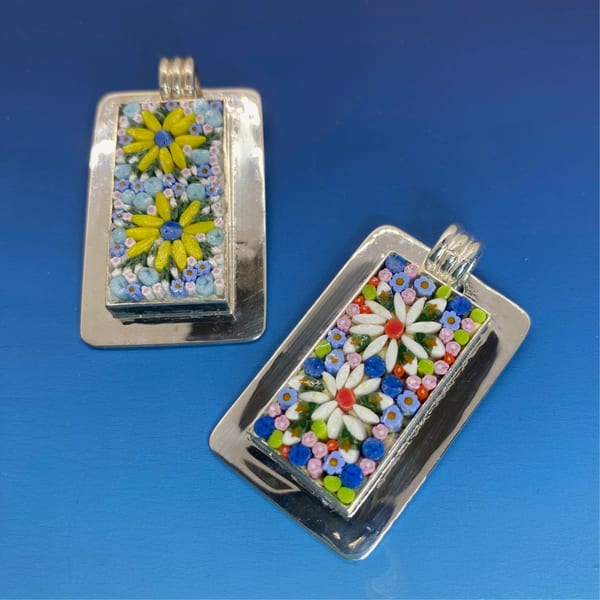
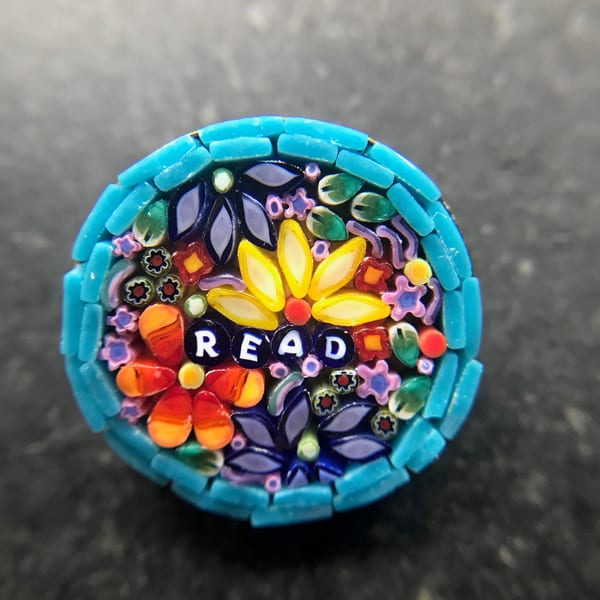
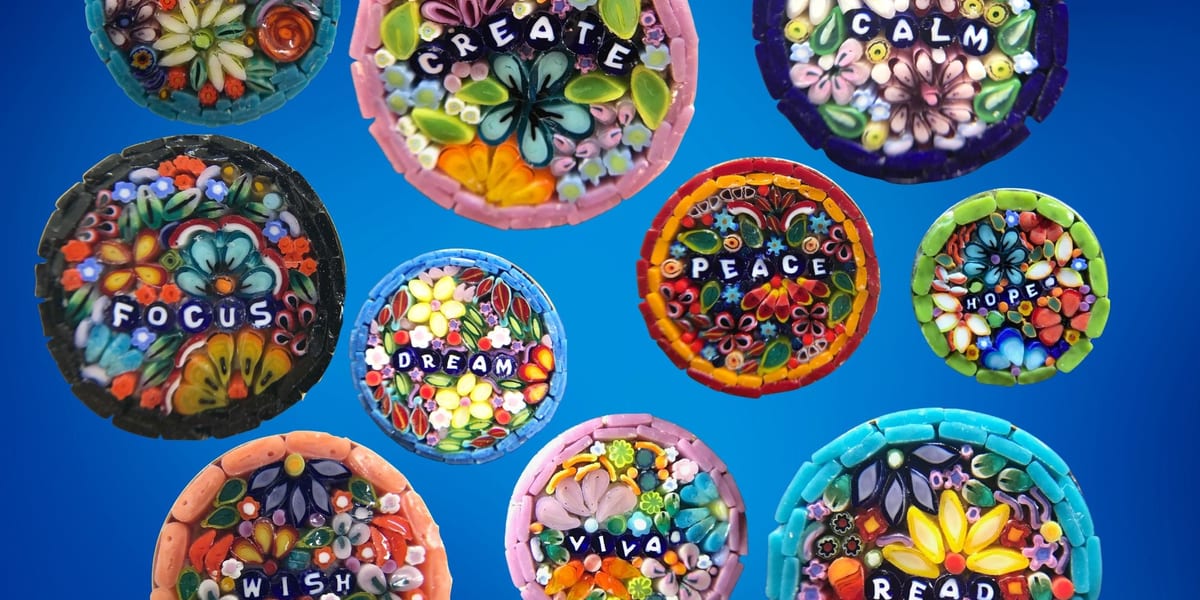
Micromosaic Jewelry by Janice Peacock
Learn To Make Micromosaics
Janice teaches micromosaic jewelry making in workshops and online classes. Whether you are a complete beginner or an experienced jeweler looking to add a new technique, her classes offer hands-on instruction, all materials, and the encouragement to create something truly unique.
View Classes & Join the Waiting List